East Gate Bel Air
Historic streets, private gardens and life on the Westside
Explore East Gate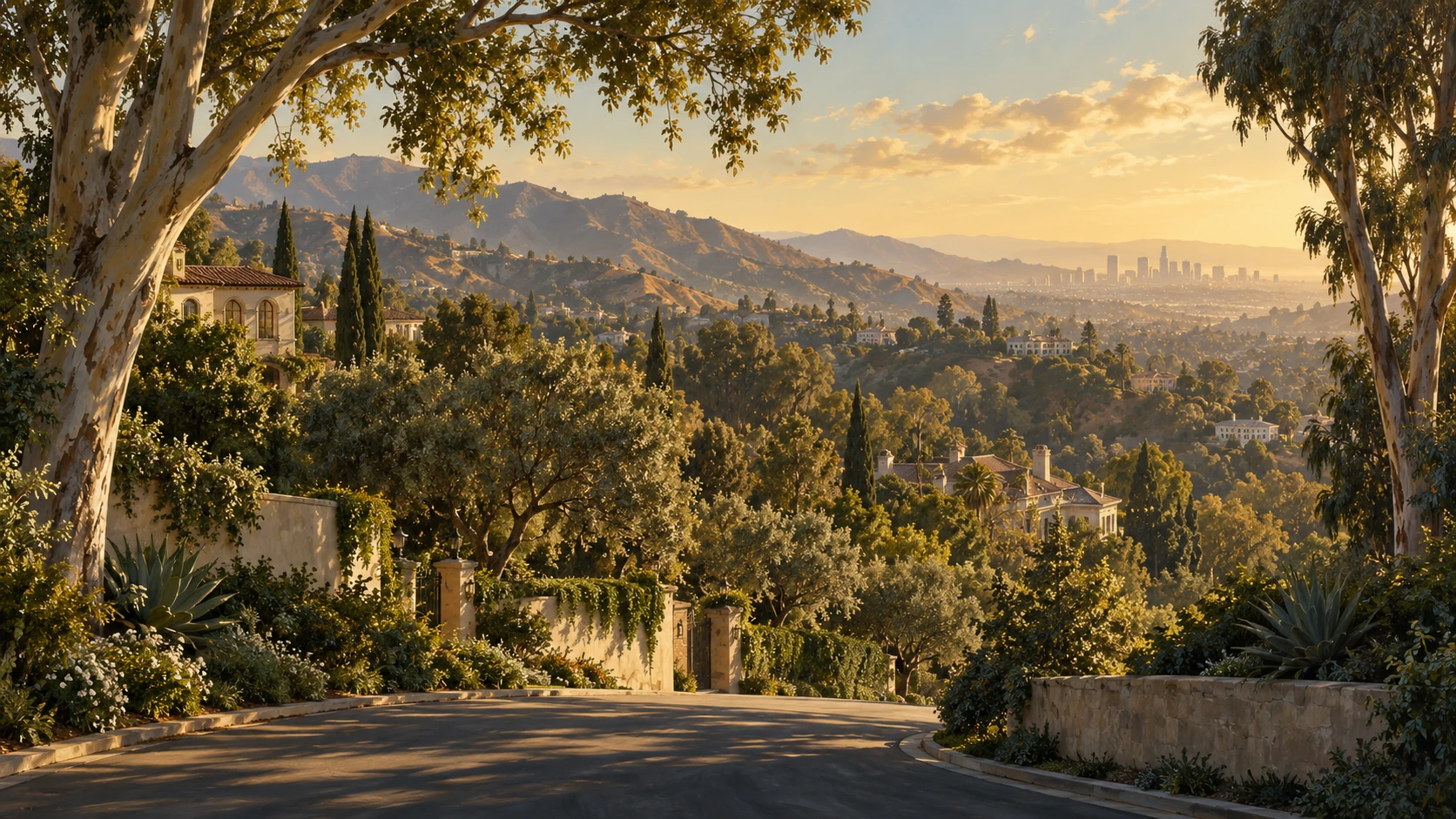
Historic streets, private gardens and life on the Westside
Explore East GateHistoric streets, private gardens and a practical connection to the Westside. Choose the estate by its setting, architecture and the way it supports your everyday life.
East Gate Bel Air appeals to buyers who want an estate setting with a clear connection to the city around it. The interest lies in the relationship between a home and its grounds: the approach from Sunset, the trees that frame the entrance, the amount of genuinely usable garden, and the way interior rooms open to outdoor space. A large house can make a strong first impression. A well-chosen site continues to matter when the house becomes part of ordinary life.
This is a useful place to begin a Bel Air search if the Westside is central to your routine. UCLA, Westwood, Beverly Hills and the wider network of galleries, restaurants and gardens provide reasons to leave the property, while the residential setting offers reasons to stay home. The balance depends on the specific street and estate. A home near an entrance, one farther up a winding approach and one screened within a canyon can feel quite different even when they share a neighbourhood label.
Choosing here calls for more than a comparison of bedroom counts. Look for a comfortable daily route, outdoor rooms you will use, architecture that suits the site, and privacy that holds up beyond the listing photograph. The best fit should be evident during a quiet weekday visit as well as a carefully staged showing.
The City's SurveyLA historic-resources report identifies the Bel Air East Gate at Bel Air Road and Sunset, dating it to 1924. This is the landmark to use when orienting an East Gate search. The report records the gate as a community-design feature associated with suburban development; it does not establish that every nearby house has a historic designation. Los Angeles City Planning historic-resources survey
East Gate is most useful as a description of a residential setting around a historic arrival, rather than a substitute for a parcel map. Ask where a property sits in relation to the entrance, how it is reached, and whether the advertised neighbourhood description matches the address. The Bel Air–Beverly Crest planning area is considerably larger and includes a range of canyon and hillside neighbourhoods. Its boundaries should not be confused with the smaller area a listing describes as East Gate. Bel Air–Beverly Crest Community Plan
Once you have the address, make the first visit about orientation. Follow the approach from Sunset, note the turns and changes in elevation, and look at how the driveway meets the road. A shaded entrance might provide a pleasing sense of enclosure; a more exposed position may offer brighter rooms or a wider outlook. Neither is automatically better. They support different ideas of daily life.
The historic gate also should not be treated as proof of security arrangements at an individual home. Establish whether access is managed at the property, what visitors encounter on arrival, and which arrangements are included in ownership. A neighbourhood's well-known entrance and a home's operating gate are different things to evaluate.
Bel Air's early development was tied to Alphonzo Bell's purchase of land in west Los Angeles and his plan for a residential neighbourhood. The Bel-Air Association traces that history to a 600-acre acquisition. The enduring relevance for a buyer is the idea of a neighbourhood arranged around residential land, individual homes and a recognisable entrance, rather than a commercial centre. Bel-Air Association history
Celebrity ownership is often used to make Bel Air sound exclusive, but it does little to explain how a particular estate works. A documented architectural history, original plans, a coherent renovation and a mature landscape are more useful subjects to investigate. If a property is promoted through a famous former owner or a named architect, request the supporting records. Treat the story as something to verify, alongside the building and site.
Older estates also need to be understood as buildings that have changed. An original façade can sit in front of heavily altered interiors. A restrained exterior may conceal a substantial recent reconstruction. Ask which parts survive from the earlier house, which were replaced, and how the additions connect. The answer affects both architectural interest and the amount of future work required.
East Gate searches can involve homes described as traditional estates, Mediterranean-inspired residences or contemporary houses. Style labels are a starting point. The more useful test is whether the design responds well to the property's ground, orientation and surroundings.
For a traditional home, examine the proportions before the finishes. Look at the relationship between the entrance, principal rooms and garden. Are ceilings and windows scaled to the room? Does an addition interrupt the original circulation? Can the kitchen and everyday living spaces function without forcing the household through formal entertaining rooms? A handsome front elevation cannot resolve a floor plan that feels awkward every morning.
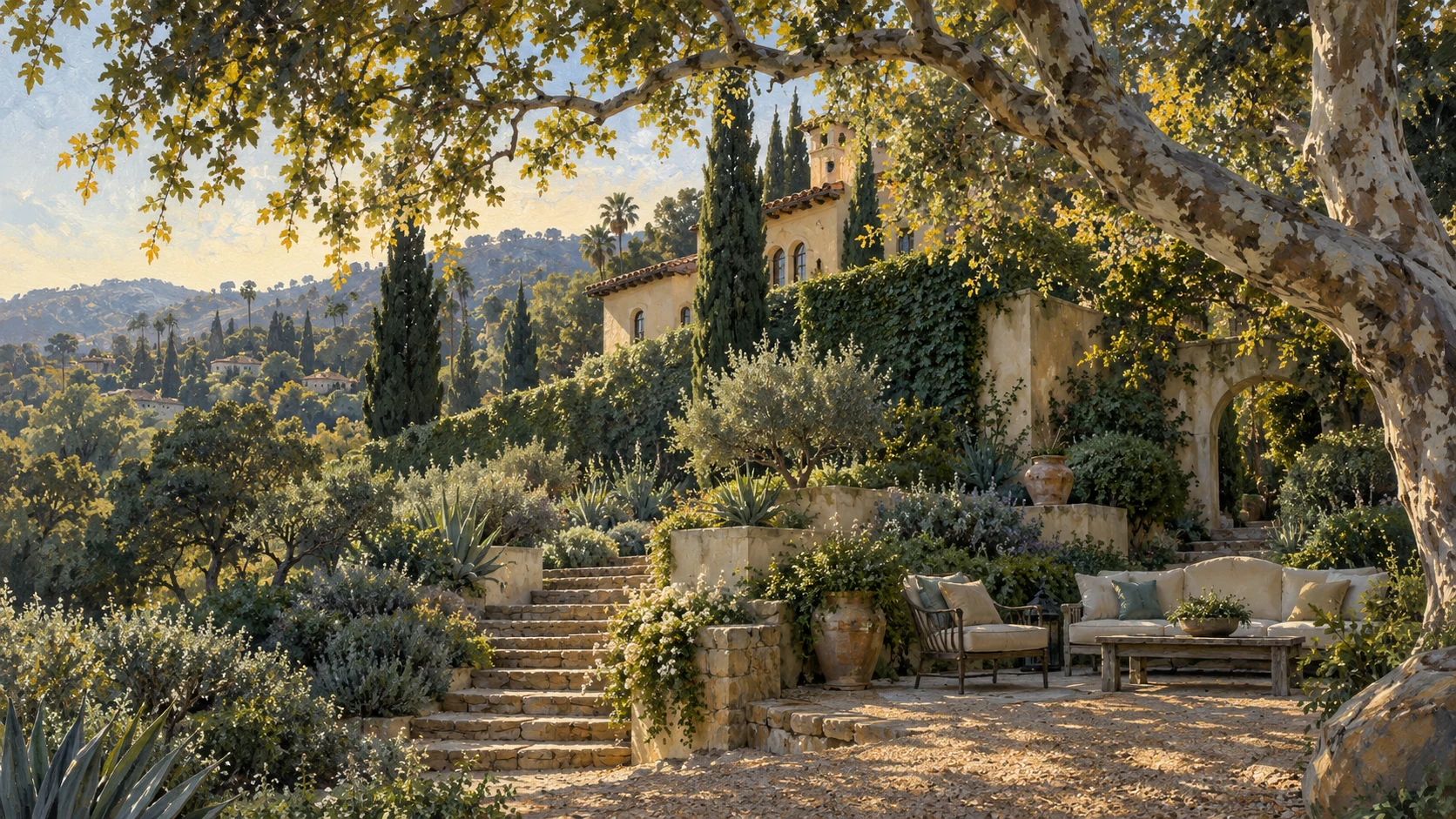
With a Mediterranean-inspired estate, courtyards, shaded loggias and terraces deserve close attention. They can turn a garden into usable living space when their orientation, depth and connection to the interior are right. Visit when sunlight reaches the outdoor areas you expect to use. An impressive terrace may be uncomfortable at the hour you would normally sit there, while a smaller sheltered courtyard may become the most valuable room in the house.
Contemporary architecture needs the same scrutiny. Large panes of glass can create an open relationship with the landscape, but they also expose neighbouring sightlines, glare and heat. Test the house with shades open and closed. Look at whether the garden remains inviting from the bedrooms and whether the main living level feels connected to the ground rather than suspended above it.
For every style, ask how the home manages arrivals, guests and service. Deliveries, gardening, maintenance and waste collection are part of estate life. A plan that separates those movements comfortably from the principal entrance can preserve the experience that attracted you in the first place. This is especially relevant when a driveway, garage or service court has been squeezed into an older site.
A garden estate is only as useful as the spaces its owner can enjoy. During a showing, walk the grounds rather than assessing them through the windows. Identify a level place for dining, an outdoor area for quiet mornings, a useful lawn if you want one, and a route between them that feels natural. Large planted slopes can be beautiful, but they do not perform the same function as accessible terraces or level ground.
Privacy should be tested from both directions. A hedge may screen the road while leaving a pool visible from an uphill neighbour. A bedroom terrace may have a long outlook but little separation from another outdoor area. Ask your agent to help understand the surrounding properties and the difference between temporary screening and a site that provides lasting distance or orientation.
Mature trees contribute to the appeal of an established estate, and their condition matters. An arborist can help assess health, maintenance needs and the relationship between roots, buildings and hardscape. Landscape planning should also account for irrigation, drainage and maintenance access. The objective is a garden that remains enjoyable through regular care, rather than one that depends on a costly rescue after purchase.
Outdoor lighting is another part of the experience to inspect in person. Return after dusk where access allows. Notice how the entrance, paths and terraces are illuminated, and whether lights spill into bedroom windows or toward neighbours. The setting should be comfortable and legible without turning the grounds into a stage. A late visit also helps reveal sounds that may be absent during an afternoon appointment.
The most useful way to assess an East Gate home is to picture an ordinary week. Where does breakfast happen? Which garden space will actually be used? Can someone work quietly while another person entertains? Is there a comfortable room for visiting family, and can guests move through the house without crossing the main bedroom area?
Estate-scale homes can create distance within a household as well as privacy from the street. Look at the rooms you would occupy most often, not only the formal salon, theatre or guest wing. A kitchen connected to a useful terrace, a library with good daylight or a smaller living room may shape daily enjoyment more than a dramatic reception hall. Furniture layouts help reveal whether the spaces are inviting or simply large.
Consider the work of running the property too. Establish how deliveries are received, where garden equipment is stored, and whether tradespeople can reach mechanical systems without disrupting the home. If you intend to travel frequently, ask how the house is monitored and maintained in your absence. A thoughtful property plan can make these routines manageable; a difficult one turns each service visit into an event.
Finally, spend time at the boundary between private grounds and the surrounding street. Observe what a guest or delivery driver sees, whether the entrance is easy to identify, and how vehicles turn. These practical details are part of the sense of arrival. They help determine whether the home feels welcoming to people you invite while preserving the separation you want.
Hotel Bel-Air gives the wider Bel Air area a distinctive dining destination on Stone Canyon Road. Its restaurant currently describes modern Californian cooking with Mediterranean influence, and the operator also lists the Bar & Lounge, afternoon tea, the pâtisserie and private dining. These provide different ways to use the setting, from a meal to a smaller social occasion. Check the hotel directly for current menus and reservations. Dining at Hotel Bel-Air
The hotel is a destination to travel to from an East Gate address, not a promise of walkable dining from every home. That distinction matters when comparing houses. If restaurants and informal errands are important to your week, test the journey to the places you expect to use and include the return into the residential streets. Convenience is more specific than a map's short distance.
A home's own entertaining spaces deserve equal weight. Check the route from kitchen to outdoor table, the usefulness of a pantry, guest parking and the ability to receive catering deliveries. For an owner who often hosts at home, these details may have greater value than an elaborate room that is used once a year.
UCLA gives this part of the Westside a cultural and academic setting beyond the residential streets. The Franklin D. Murphy Sculpture Garden, on the university's north campus, places modern and contemporary works within landscaped grounds. It is an outdoor destination that combines a garden walk with close attention to art; consult the museum's directions and campus parking information when planning a visit. Franklin D. Murphy Sculpture Garden
The UCLA Mathias Botanical Garden offers another way to spend time outdoors. The garden's visitor page provides its map, seasonal opening information and current access guidance. It is a public living collection rather than an extension of Bel Air's private gardens, and can be useful for anyone interested in plants, garden design or a quieter outing on campus. UCLA Mathias Botanical Garden
In Westwood Village, the Hammer Museum sits at Westwood and Wilshire boulevards. Its current visitor information confirms free admission, with parking and other arrangements detailed separately. Look at the exhibition and programme calendar before going; the value of having an institution nearby is the opportunity to return as its offerings change. Hammer Museum visit information
The Getty Center adds a different kind of Westside excursion. Its hilltop campus combines Richard Meier's architecture, art galleries and views across Los Angeles. Robert Irwin's Central Garden gives the landscape its own reason for a visit. These are destinations beyond East Gate, and their arrival arrangements deserve a little planning. Check the Getty's current reservation and visit information rather than assuming a spontaneous drive will work. Getty architecture, Getty gardens
When deciding between properties, think about which of these places you would actually use. A house that fits an established routine may offer more practical enjoyment than one selected around an impressive list of nearby institutions.

Private outdoor space can be a central part of life in East Gate, but it serves a different purpose from a public park or a longer walk. A terrace offers convenience and control over the setting. A botanical garden, museum landscape or mountain trail provides a change of scenery. A home search is stronger when it accounts for both.
UCLA's public gardens and the Getty's landscapes are useful options for planned outings. For trails farther west in the Santa Monica Mountains, check the land manager's current guidance. Will Rogers State Historic Park has published recovery and reopening information following the Palisades Fire, including restrictions on some areas. An old trail description or an old photograph is not enough to establish present access. California State Parks reopening guidance
Avoid assuming that a residential road is a comfortable walking route simply because it looks quiet in a photograph. On a visit, assess the actual walking space, visibility around bends, slopes and traffic. If a regular walk is an important part of your routine, test a suitable route in person. The result may influence your choice of street or encourage a home with more usable grounds.
Sunset is the main orientation point for the historic East Gate entrance, but the quality of an address's access depends on the entire journey. Begin with the places you need to reach: work, campus, school, family, the airport or a preferred part of the Westside. Then test the candidate property's route at relevant times instead of relying on a fixed commute claim.
Short distances can conceal awkward turns, a slow final approach or a driveway that becomes inconvenient when several vehicles arrive together. A longer route may feel easier if the connections and entrance are straightforward. Ask your agent to arrange a route visit separately from the house tour so that a polished interior does not distract from the daily approach.
At the property, examine driveway gradient, turning space and the interface with the road. Think about guests, larger deliveries and the vehicles your household actually uses. If a garage is visually discreet but difficult to enter, you may experience that tradeoff every day. Confirm parking arrangements rather than assuming that a broad street or generous frontage provides unrestricted space.
Emergency access and local parking notices also belong in the practical review. LAFD's Red Flag parking programme covers posted locations where keeping roads clear matters during wildfire conditions. Check the official information for the address and surroundings; a neighbourhood name does not explain which signs or restrictions apply on a specific road. LAFD Red Flag parking information
For families, school planning begins with the actual address. LAUSD's Resident School Identifier is designed to identify resident school assignments from a student's residential address, while other programmes may use separate enrolment processes. Use the district's tool and confirm details with the relevant school rather than treating an East Gate label or listing description as a guarantee. LAUSD school-identifier support
School visits should include the journey you would make from the house. Consider departure routines, drop-off arrangements and how after-school activities combine with work or other commitments. If considering an independent school, speak directly with its admissions team. Proximity does not establish admission, and a route that looks manageable on a weekend may feel different during a school day.
UCLA Health's Ronald Reagan UCLA Medical Center is located on the Westwood campus. Its presence is part of the wider area's institutional setting, but healthcare planning remains personal: confirm providers, appointment locations and coverage directly. The facility's own directions are the useful source for a visit, rather than a property's advertised travel-time estimate. Ronald Reagan UCLA Medical Center
Other household logistics are less glamorous and equally important. Check where regular shopping happens, how deliveries are handled, whether visiting family can park comfortably, and what arrangements you need for pets or maintenance. These are good reasons to revisit a shortlisted property before making a decision.
Compare East Gate with Lower Bel Air when the balance between an estate atmosphere and access to the Westside is central to your search. Compare actual addresses rather than assuming that the two labels describe entirely separate or uniform experiences. Ask how the approach, grounds and surrounding homes differ.
West Gate Bel Air and Stone Canyon are useful comparisons if you are drawn to greater enclosure, a different arrival or a canyon setting. The same questions remain important: available light, useful outdoor areas, road access and privacy from nearby properties. A sheltered site can be appealing while requiring a closer look at orientation and drainage.
Consider Upper Bel Air if elevation and a wider outlook are priorities, while keeping the ease of the daily approach in the comparison. A view and a garden do not always come together in the proportions you want. Decide which matters more before a striking panorama changes the brief.
Holmby Hills provides an adjacent estate-area comparison rather than another name for Bel Air. For buyers considering a managed enclave, also review the actual governing documents and amenities at Moraga Estates or Bel Air Crest. The objective is to compare ownership experiences, including how access and maintenance work, rather than rank neighbourhood names.
Begin the records review with the parcel. Los Angeles City Planning's ZIMAS tool provides property-specific zoning, land-use and planning information, including relevant overlays and case history. If an addition, rebuilt home, guest structure or landscape project is part of your plan, have the applicable records reviewed before treating that project as feasible. City zoning search and ZIMAS
Use LADBS PRISM to research building permits and related records. Compare the records with the house as it stands, including additions, converted spaces, pools and other substantial work. A renovation's attractive finishes do not establish the scope of its approvals or the condition of what lies behind them. Your inspection team should explain the gaps and the next questions to ask. LADBS permit and records search
For a sloping or heavily terraced site, obtain appropriate professional advice on drainage, retaining structures and the ground beneath the property. Review any existing reports and understand their date and scope. Ask how water is collected and discharged and whether landscaping conceals areas that need inspection. These checks help establish whether the outdoor spaces can remain useful without an unexpected engineering project.
Start insurance discussions early enough to obtain written terms for the exact property. Compare coverage, conditions, limits and exclusions as well as the premium. The California Department of Insurance's residential guide is a useful starting point, but a general example is not a quote for an East Gate estate. California residential insurance guide
Use current official tools for wildfire-related questions. LAFD directs property owners to the State's hazard-zone map and provides evacuation-preparedness resources. Check the address, obtain the relevant documents and ask qualified advisers how they relate to the home. Do not assume that all Bel Air properties have the same designation or that a landscaped garden settles the issue. LAFD fire-zone map, LAFD wildfire preparedness
Finally, review title, boundaries, access rights and any applicable private restrictions with the appropriate professionals. These can affect the practical use of a driveway, a planned gate or a landscape change. The aim is to understand the property you are buying and preserve the reasons you chose it.
Ask for the exact arrival route and drive it. The City identifies the historic gate at Bel Air Road and Sunset, but a property's marketing description does not tell you every turn between that landmark and the front door. A route test is useful even when you already know the wider neighbourhood.
Walk the grounds and identify the areas for dining, relaxing, gardening or play. Separate useful level space from steep planting, retaining structures and ornamental areas. An estate can have considerable land while offering a smaller practical garden than its lot size suggests.
Check sightlines from living rooms, bedrooms, pool areas and terraces. Ask what provides the screening and how neighbouring properties relate to the site. Assess privacy as an everyday condition rather than a single photograph with carefully chosen framing.
Request the renovation history and available permits, plans and inspection documentation. Match them to the rooms and structures you have seen. Use qualified advisers to interpret the record and identify further inspections, especially where older construction and new work meet.
Test your own routes and routines. Include school or campus journeys, regular errands, guests and the final driveway approach. A home's appeal should survive the practical details of living there, without relying on promised commute times.
A strong East Gate choice brings several qualities together: an arrival that works, a house with comfortable everyday rooms, grounds that support the way you want to spend time, and an address that fits your connection to the Westside. Architecture and landscape should reinforce each other. The records and inspections should explain the property clearly enough for you to make a confident decision.
Begin with those priorities, then compare a small number of homes closely. Visit at different times, walk the garden, test the approach and ask for the supporting documents. If you need help shaping the search or connecting with local representation, book a consultation with the address, preferred estate setting and daily routines you want the home to support.
Share the property, timing and context you are considering. This is a request for direct guidance—not a subscription to a marketing list.
Start a confidential conversation